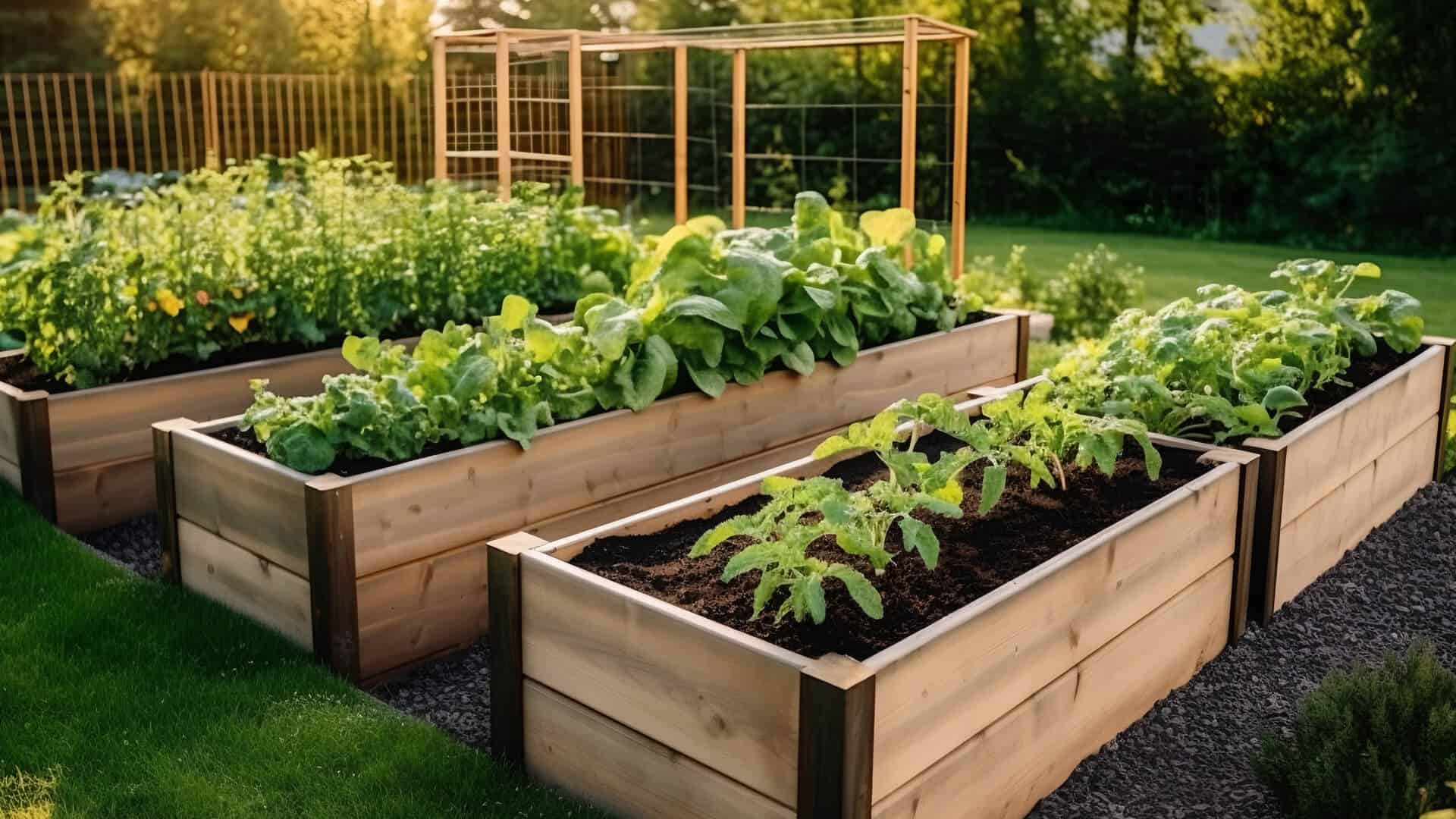
Build a productive raised bed garden using a simple four foot by eight foot wood frame. Place your bed in a spot that gets six to eight hours of direct sunlight every day. Fill it with a soil mix of fifty percent topsoil and fifty percent compost, then water it deeply with five gallons of water before planting.
Choose the Right Sun and Site Location
Pick a flat area in your yard that receives a full day of sunlight. Sunlight drives plant growth, so aim for a location clear of shade from trees, fences, or your house. Test the light by checking the spot at nine in the morning, twelve at noon, and four in the afternoon. If sunlight hits the ground at all three times, the site works well for growing food.
Keep your raised bed near an outdoor water tap. Hauling buckets across a long distance slows down your routine and makes daily care hard work. Make sure you can walk completely around all four sides of the frame. Leaving a two foot path around your bed gives you easy access for weeding, harvesting, and routine maintenance without stepping into the soil.

Fill the Frame with Quality Raised Bed Soil
Fill a standard four foot by eight foot frame with sixteen cubic feet of soil mix. Use equal parts of quality topsoil and well rotted compost to create a nutrient rich base for plant roots. Mix the two materials together inside the frame using a standard metal garden rake. This balanced mix holds onto moisture while allowing extra water to drain away quickly.
Soak the dry soil thoroughly right after filling your frame. Apply five gallons of water across the bed using a gentle hose sprayer head for ten minutes. Let the soil settle down for twenty four hours before you sow seeds or plant young starts. If the level drops more than two inches overnight, add more compost to fill the space back up to the top rim.
How to Layout Plants in a Raised Bed
Group your plants by their final grown height so tall crops do not shade short crops. Place tall crops on the north end of your bed. Put medium growers in the center space. Set short or trailing plants along the south end where light is strongest throughout the afternoon. Good spatial organization is a foundation of successful gardening in small areas.
- North Section (Tall): Plant eight tomato plants or eight climbing bean vines across the back row, spaced twelve inches apart.
- Middle Section (Medium): Plant six pepper plants or six bush zucchini starts in two center rows, spaced twelve inches apart.
- South Section (Short): Sow sixteen radish seeds or sixteen carrot seeds along the front edge, spaced three inches apart.
- Border Edge: Tuck four French marigold plants into the four corners to attract bees and beneficial insects.
Watering Rules and Daily Care Steps
Water your raised bed three times a week during spring and summer. Give the bed one inch of total water each week, which equals roughly six gallons of water per session for a four by eight footprint. Water early in the morning between six and eight in the morning. Morning watering lets plant foliage dry off completely in the morning sun, which stops leaf fungus from growing.
Apply water directly to the root zone at the base of each stem using a watering can or a low pressure hose nozzle. Never spray the tops of the leaves in the heat of the afternoon sun. Spread a two inch layer of shredded straw or wood bark over the bare soil surface. Mulch locks soil moisture in place, cuts down watering needs by half, and keeps weed seeds from sprouting.
Simple Weed and Harvest Schedule
Set aside ten minutes every Tuesday and Friday to check your raised bed for tiny weeds. Pull weeds out by hand as soon as you see green shoots pushing up through the mulch layer. Removing young weeds when their roots are small takes minimal effort and keeps them from taking nutrients away from your main crops.
- Daily Check: Spend two minutes checking under plant leaves for small pest bugs or dry soil conditions.
- Weekly Feeding: Apply two gallons of liquid seaweed fertilizer mixed into your water every fourteen days.
- Early Harvest: Pick ripe tomatoes and green beans every three days to encourage the plants to grow more food.
- Clear Out: Pull up old spent plants at the end of the season and top the bed with two inches of fresh compost for winter.
Comments
Post a Comment